
By Chatura Rodrigo
IPS Researcher
IPS Researcher
Paddy occupies approximately 37 per cent (0.77 million ha) of the cultivated land area of Sri Lanka. It is cultivated during two major seasons; Yala and Maha, where a majority is cultivated during the latter. Close to 1.8 million farm families are dependent on paddy farming throughout the country. The demand for paddy in Sri Lanka will increase at a rate of 1.1 per cent per year, which requires production also to increase at a rate of 2.9 per cent per year. Therefore not only is paddy the staple food of the country, but its cultivation is the livelihood of a significant portion of people (DSC, 2013).
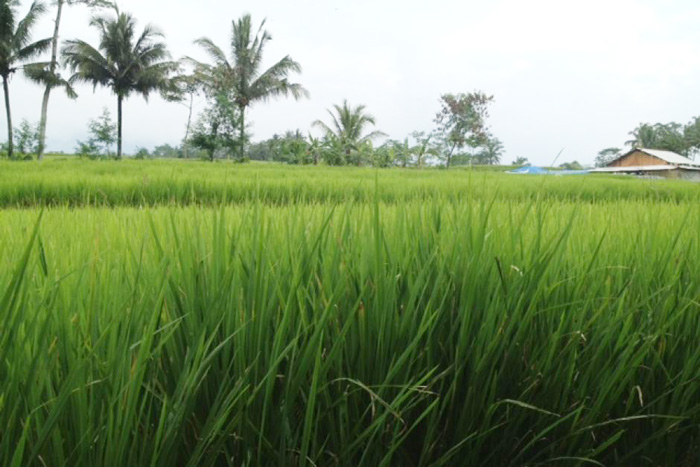
The ‘green revolution’ of the early 1960s, supported by agricultural policies such as fertilizer subsidies, placed Sri Lanka on the fast track to becoming a production economy. With subsidized fertilizer and the establishment of irrigation schemes, farmers were given the motivation to be more production oriented. These heavy production agricultural methods in the paddy sector were supported by the new and improved high yielding varieties. Even though these new improved paddy varieties were short termed and high yielding, they were chemical fertilizer and labour intensive and posed a negative externality to the environment (Wiggins and Brooks, 2010). Most importantly, these new improved production incentive paddy varieties and agricultural practices were not resilient towards climate change impacts.
